



"I always noticed my daughter was a little different with movements. While other kids ran, climbed, and tied their shoelaces with ease, she would stumble, struggle to hold a pencil, or avoid playground games. At first, I thought she was just being clumsy — but the tears in her eyes when she couldn’t keep up with her friends told me it was more. That’s when I learned it wasn’t laziness or lack of effort… it was Dyspraxia."
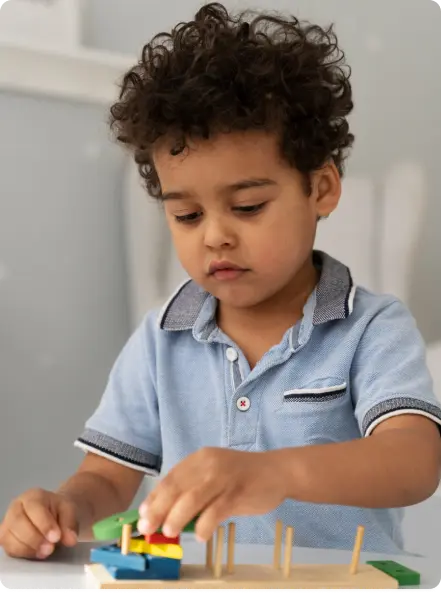

Clumsiness is not laziness - it’s a challenge of coordination. With the Jeevashakthi approach, we offer occupational and physiotherapy, Ayurveda for nervous system balance, yoga for motor planning, and sensory-based activities guided by technology. We focus on building confidence in everyday tasks and play, helping children participate fully in school and social life.
 Occupational Therapy
Motor planning, coordination, fine motor skills, handwriting, and daily living activities.
Physiotherapy
Posture correction, balance, strength, coordination, and gross motor development.
Speech & Language Therapy
Oral motor skills, articulation, and speech clarity for children with dyspraxia affecting speech.
Sensory Integration Therapy
Helps children process sensory input, improving coordination, attention, and body awareness.
Cognitive-Motor Training
Exercises combining thinking and movement to improve sequencing, timing, and motor planning.
Adaptive Physical Education / Sports Therapy
Tailored physical activities to improve coordination, endurance, and confidence.
Yoga & Movement Therapy
Enhancing body awareness, motor control, flexibility, and focus.
Music & Rhythm Therapy
Using rhythm and music to improve timing, coordination, and motor planning.
Behavioral / Emotional Support
Counseling to manage frustration, anxiety, or low confidence due to motor difficulties.
Modern Medicine Integration
Medical evaluation and guidance for coordination difficulties, comorbid conditions, and overall developmental assessment.
Ayurveda
Therapies to improve motor coordination, balance, focus, and sensory integration.
Family Training & Support
Guidance for caregivers to promote independence, safe practice of motor tasks, and home-based exercises.
Long-Term Care
Continuous support for motor, functional, and emotional development to enhance daily living, school participation, and social inclusion.

Signs often appear in early childhood, such as delayed crawling, walking, or difficulty with tasks like holding a spoon, tying shoelaces, or playing simple games. Early observation and assessment help in timely intervention.
No. Dyspraxia is a neurological condition affecting motor planning and coordination. Children are not lazy; their brains struggle to plan and execute movements efficiently compared to peers.
Dyspraxia is not progressive. With appropriate therapy and practice, children can improve motor skills, independence, and confidence. Challenges may remain, but targeted support helps manage them effectively.
A multidisciplinary approach is most effective: occupational therapy, physiotherapy, sensory integration therapy, cognitive-motor training, speech therapy, adaptive physical education, yoga, and music therapy. Emotional support and family guidance are also essential.
Motor difficulties can make school tasks, physical activities, and self-care challenging, leading to frustration or low self-esteem. Emotional support, praise for effort, and consistent practice help children stay motivated and confident.
Dyspraxia is a neurological condition that affects the ability of a child to plan and coordinate movements and thus makes the daily activities of the child, such as writing, dressing, or playing, more challenging.
Dyspraxia is normally associated with brain development and the processing of information related to movement. Factors like premature birth, low birth weight, and genetic or prenatal factors may increase the risk.
Dyspraxia can't be totally cured; however, early treatment and interventions have the potential to help the person gain a lot of coordination, motor skills, and independence in their daily activities.
The initial symptoms are a delay in motor development, poor balance, clumsiness, an inability to use the hands to perform tasks, and difficulties in activities such as writing or playing.
Dyspraxia, which is also called developmental coordination disorder (DCD), is a neurological disorder that impacts the ability of the child to plan and coordinate movements. The dyspraxic children might experience problems in carrying out normal activities like writing, dressing, or engaging in any physical activity. These challenges occur because the brain has difficulty organizing and sending signals to the muscles.
We offer Ayurvedic-modern rehabilitation interventions for dyspraxia treatment at Jeevaniyam Medipolis in Kochi, Kerala. We are one of the most popular child development centers in Kochi, Kerala, and our main goals are the enhancement of coordination, independence, and comprehensive development with the help of personalized and structured care.
Jeevaniyam Medipolis is a trusted centre for Dyspraxia treatment in Kochi, Kerala, providing expert assessment and personalized intervention for individuals affected by Developmental Coordination Disorder (DCD). Our multidisciplinary team is committed to helping every individual achieve greater independence and confidence in their daily activities.
The most common association with dyspraxia is the brain's development and processing of information about movement. Although the precise cause is not always identified, some factors may make the condition more probable.
Dyspraxia has been linked to immature or inefficient development of the motor planning systems of the brain. This influences the brain in the way it organizes and transmits movement instructions.
The prematurely born children or children with low birth weight are at risk of experiencing developmental coordination problems.
Dyspraxia may have a hereditary element, particularly where there is a problem with development within a family.
Some disorders in pregnancy or early childhood may affect the development of the brain.
Dyspraxia, in other cases, can be attributed to brain damage during early development or to other associated developmental conditions.
Early signs of dyspraxia usually show up as difficulties in coordination and movement. As the child progresses and faces a growing number of daily demands, these symptoms can become more pronounced.
Parents can get support and assistance more quickly if they recognize these indicators early.
At Jeevaniyam Medipolis, we are based on the principle of providing structured and personalized care that promotes motor, cognitive, and functional development in a child. When we use Ayurveda together with modern treatments, we can make the children more coordinated, independent, and confident in their day-to-day lives.
In Jeevaniyam Medipolis, each child will be given an individualized treatment plan that will be based on their difficulties and strengths. We are concerned with enhancing not only movement but also learning, behavior, and well-being.
We combine traditional Ayurveda therapies with evidence-based therapy to deliver holistic care. Ayurveda promotes the well-being of the nervous system and general health, whereas modern therapies enhance coordination, communication, and functional skills.
Every child is individually evaluated in terms of its developmental status and commences therapy. On this basis, an individual plan of treatment is developed based on the age of the child, severity of the condition, and developmental objectives.
Treatment of dyspraxia at Jeevaniyam Medipolis aims to enhance motor planning, coordination, sequencing, and independence in daily activities. Both therapies help children control their movements better and feel more confident in their performances. Our comprehensive Dyspraxia treatment in Kochi, Kerala includes a carefully structured, multidisciplinary approach:
Speech and language therapy helps children who have difficulties in the coordination of speech movements, which is common in dyspraxia. It aims at better planning and ordering of sounds to make speech clearer and more consistent. Language use and understanding are also assisted through therapy in daily communication.
Occupational therapy is central to dyspraxia management, as it targets motor planning and functional independence. It helps children learn how to plan and execute daily activities step by step. With organized tasks, children can learn to coordinate and organize the sequence of tasks and gradually control their movements.
Special education support helps children with learning problems, as well as coordination and processing problems. It is concerned with modifying the teaching strategies to those children's learning styles. During learning processes, children are guided on how to improve instructions, prioritize tasks, and enhance concentration.
Physiotherapy assists children in the improvement of body coordination, balance, and movement control. It focuses on training and hardening the muscles and posture, which dyspraxia usually affects. Experienced exercises allow children to come up with smoother and more controlled movements.
We follow the measurable changes in motor coordination, communication, daily living skills, social participation, academic progress, and emotional regulation. Regular assessments help in checking that every child is developing and getting the right support.
Jeevaniyam Medipolis is a trusted choice for families who need to find structured care regarding developmental issues with compassionate treatment. As a leading child development center in Kochi, Kerala, we combine the services of Ayurvedic doctors and modern therapists to offer balanced and personalized care to every child. We are interested in measurable improvement and in developing a safe and supportive environment in which children can develop self-confidence.
We provide a child-friendly environment where children are in their comfort zone and encouraged throughout the therapy. We have a multidisciplinary team that closely collaborates, and we advise parents to facilitate progress at home. Our location is conveniently in Kochi, and we are able to offer reliable and accessible services to families all over Kerala with detailed evaluations and years of experience.
Our specialists in Dyspraxia treatment in Kochi, Kerala conduct thorough evaluations to understand each individual's challenges and design targeted therapy programs for meaningful progress.
Is your child showing signs of poor coordination, difficulty writing, or struggling with everyday tasks? Early intervention is the key. Reach out to Jeevaniyam Medipolis today for the most trusted dyspraxia treatment in Kochi, Kerala because every child deserves the opportunity to move, learn, and grow with confidence.


 About Us